
El Niño is back – and if you've been following the weather headlines recently, you may also have come across the rather more dramatic phrase "super El Niño".
For skiers, the obvious question is: what could El Niño mean for ski holidays in the Alps this winter, and how could it affect the ski season in Europe?
Could it bring huge snowfalls? A warmer winter? More storms? Or does something happening thousands of miles away in the Pacific actually make very little difference to skiing in France, Austria and Switzerland?
The slightly frustrating – but scientifically accurate – answer is that El Niño can influence the European winter, but it can't reliably tell us how snowy the Alps will be.
There are, however, some interesting clues about the type of winter we could experience – and some ski resorts are naturally better placed than others to make the most of whatever the weather brings.
El Niño in 60 seconds
El Niño is the warm phase of a naturally occurring climate cycle called the El Niño Southern Oscillation (ENSO).
During an El Niño event, surface waters across the central and eastern tropical Pacific Ocean become warmer than average. That enormous area of unusually warm water changes the interaction between the ocean and atmosphere, affecting winds, rainfall and weather patterns around the world.
The strongest and most predictable impacts tend to occur around the Pacific and across parts of North and South America, which is why much of the El Niño coverage you see concentrates on the USA, Canada, Australia and South America.
According to the NOAA Climate Prediction Center, El Niño is already under way and is forecast to strengthen through the end of 2026. NOAA currently gives it a 97% chance of continuing into early spring 2027.
You may also see the expression "super El Niño". It isn't an official scientific classification, but is commonly used to describe an exceptionally strong event. Importantly, the strength of El Niño itself doesn't automatically determine the strength of its effects in every part of the world.
So, will El Niño mean more snow in the Alps?
This is where things get considerably more complicated.
El Niño's influence on European weather is much weaker and less consistent than it is around the Pacific.
There is evidence that El Niño can influence atmospheric circulation over the North Atlantic and Europe, potentially altering the position of the jet stream and changing the likelihood of particular weather patterns at different stages of winter.
But that's very different from saying "El Niño equals a snowy winter".
European winter weather is affected by numerous competing factors, including the North Atlantic Oscillation, the position of the Atlantic jet stream, pressure patterns, sea temperatures closer to Europe, polar and stratospheric conditions and, ultimately, the individual weather systems that arrive during the season.
Météo-France also stresses that while El Niño has major global effects, its influence varies enormously according to location.
So El Niño might change the odds of certain weather patterns occurring, but it can't tell us whether it will snow heavily in Val d'Isère on 15th January (for example), or whether you'll be sitting outside in Méribel or Avoriaz drinking coffee in brilliant sunshine a week later.
Seasonal forecasting deals in probabilities rather than individual snowstorms.
What should skiers actually look for this winter?
If you're choosing a ski holiday for winter 2026/27, we'd pay considerably more attention to altitude, geography, slope orientation and the extent of the ski area than to headlines and social media posts predicting an El Niño-powered snowmageddon.
Different resorts can perform surprisingly differently during exactly the same weather system.
Here are some good examples.
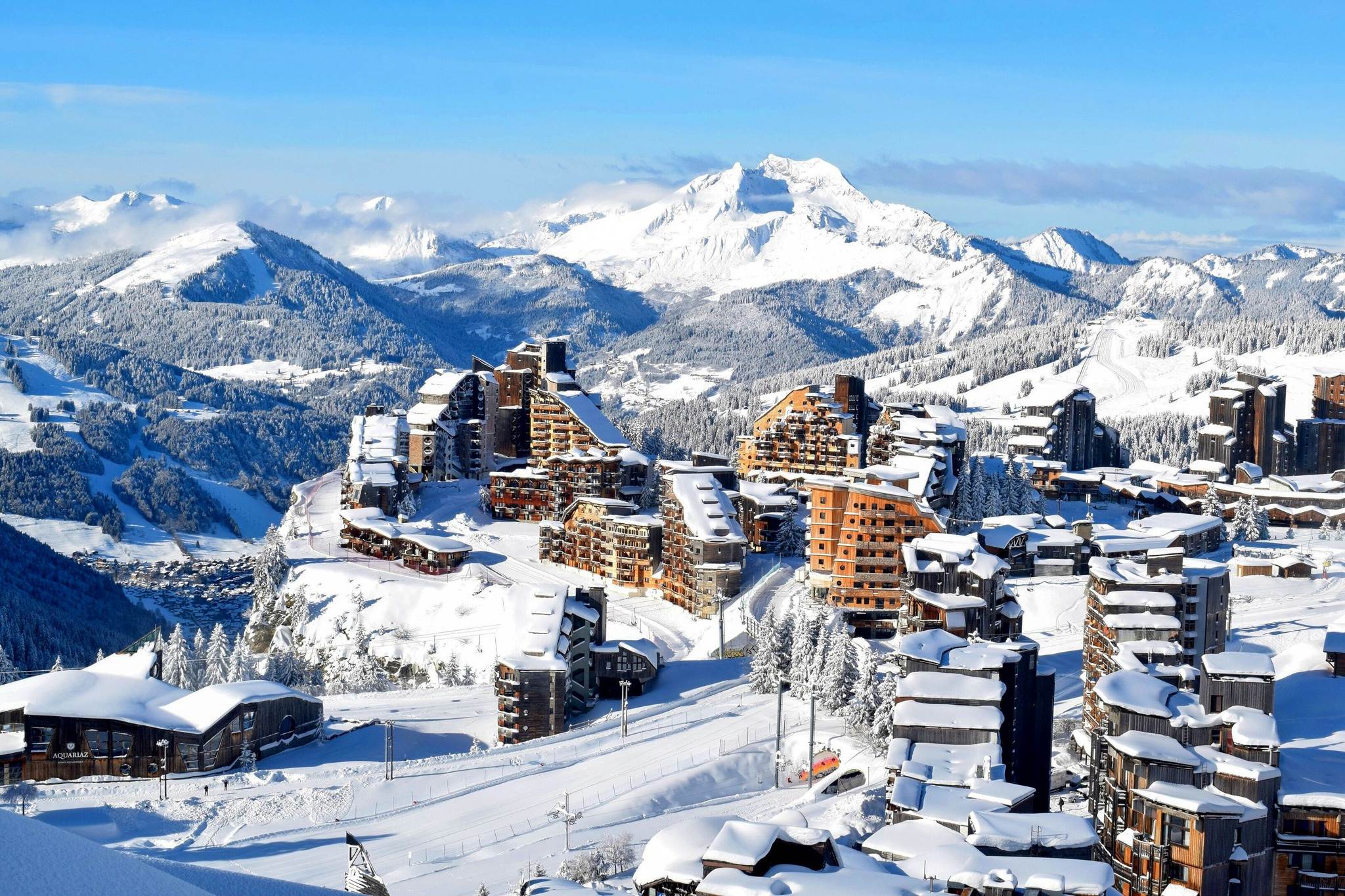
Avoriaz – ideally placed to catch incoming snow
Avoriaz has one of the best snow records of any French resort at its altitude, and geography has plenty to do with it.
The Chablais sits on the north-western edge of the Alps, leaving Avoriaz particularly well exposed to weather systems arriving from the west and north-west.
When moisture-laden air hits the mountains it is forced upwards, cooling as it rises and producing rain or snow. This process is known as orographic lift – essentially, the mountains squeeze moisture out of the incoming air.
Avoriaz then adds altitude to the equation. The resort sits at around 1,800m, skiing reaches approximately 2,460m and much of its terrain has a northerly aspect.
That combination of exposure, altitude and slope orientation helps explain why Avoriaz can accumulate impressive quantities of snow even when neighbouring areas lower down the mountain are experiencing much more marginal conditions.
Val d'Isère and Tignes – altitude on their side
If temperatures are relatively mild, Val d'Isère and Tignes have a different advantage: height.
Much of the skiing takes place above 2,000m and the linked ski area climbs to well over 3,000m. Tignes itself has villages at around 2,100m, while Val d'Isère sits at approximately 1,850m.
That's important during borderline weather events.
A difference of only a few hundred vertical metres can determine whether precipitation arrives as rain, sleet or snow. Higher resorts therefore have a valuable temperature buffer when the freezing level rises.
It doesn't make them immune to warm weather, but it makes high-altitude resorts such as Tignes and Val d'Isère particularly useful choices when snow reliability is a priority.
Val Thorens – Europe's highest major ski resort
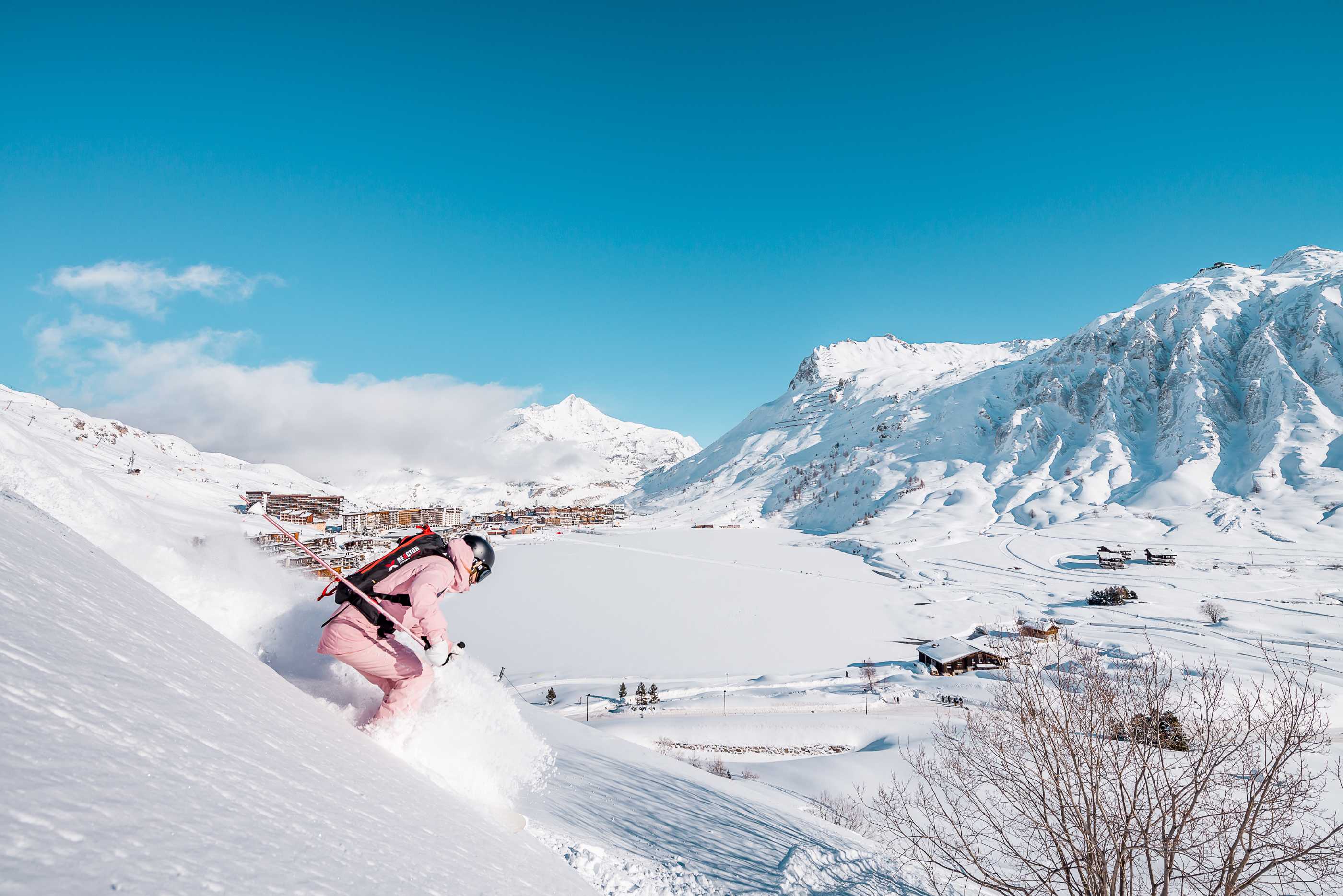
At approximately 2300m, Val Thorens has perhaps the most obvious geographical insurance policy of all.
The resort is surrounded by high-altitude terrain and forms part of the enormous Three Valleys ski area. When the snow line moves upwards, Val Thorens can therefore remain snowy while considerably lower resorts receive rain.
There's another advantage to large ski areas such as the Three Valleys: flexibility.
Conditions can vary enormously according to altitude, aspect and even which side of a valley you're skiing. Being able to move around the mountain gives you a much better chance of finding the best snow on any particular day.
Les Arcs and La Plagne – a huge vertical range
Les Arcs and La Plagne provide another useful example of why looking at an entire ski area is more informative than simply looking at the altitude of one resort village.
The Paradiski area contains high-altitude skiing reaching above 3,000m alongside tree-lined runs considerably further down the mountain.
In warmer weather, you can head high. During a storm or whiteout, lower wooded slopes can provide better visibility and shelter.
That variety can be particularly valuable during a changeable winter.
Les Deux Alpes and Alpe d'Huez – high-altitude options further south
Not every storm approaches the Alps from the north-west.
Les Deux Alpes and Alpe d'Huez sit further south in the French Alps and can benefit from weather patterns that don't necessarily favour resorts further north.
Both also offer extensive high-altitude terrain, with skiing reaching well above 3,000m.
This is an important point when talking about an "El Niño winter": there is no single weather pattern that benefits every part of the Alps simultaneously.
A storm track that produces relatively little snow in one region can deliver huge quantities somewhere else.
And don't forget Austria and Switzerland
The same principle applies beyond France.
In Austria, resorts with access to particularly high terrain – such as Kaprun and the Kitzsteinhorn Glacier – have altitude in their favour, while areas such as the Arlberg can perform extremely well when weather systems arrive from favourable directions.
In Switzerland, high-altitude destinations including Verbier and Zermatt offer extensive skiing at elevation, while resorts such as Engelberg have developed formidable reputations for snow when the right weather patterns arrive.
The key point is that the Alps aren't one homogeneous weather zone. Geography matters enormously.
Could a milder, wetter winter actually produce lots of snow?
Potentially – and this is one of the most easily misunderstood aspects of mountain weather.
A "mild and wet" winter across Western Europe doesn't necessarily mean a poor ski season.
For the mountains, the crucial question is where the freezing level sits when that precipitation arrives.
A succession of moisture-rich Atlantic storms combined with sufficiently cold air can produce enormous quantities of Alpine snow. The same storms arriving with a freezing level several hundred metres higher could produce rain at resort level but heavy snow further up the mountain.
That is one reason altitude becomes increasingly important during marginal conditions.
It is also why long-range headlines predicting a "wet winter" don't tell skiers nearly enough. At 200m above sea level, wet means rain. At 2,500m, it could mean something considerably more exciting.
What about climate change?
El Niño and climate change are two different things.
El Niño is a naturally occurring climate phenomenon that has happened for thousands of years. Climate change is the longer-term warming of the Earth's climate, now being driven primarily by human greenhouse gas emissions.
The important point is that El Niño is now occurring within a warmer global climate.
A strong El Niño can temporarily push global average temperatures higher on top of that longer-term warming trend. Météo-France has highlighted the possibility that the 2026/27 El Niño, combined with human-caused warming, could contribute to exceptionally high global temperatures.
For skiing, the long-term trend matters.
Météo-France's research into climate change and snow cover shows that natural snow cover has already declined across French mountain ranges, although there remains considerable variation from one winter to another and between different altitudes and locations.
That distinction is important.
A fantastic snowy winter doesn't disprove climate change, just as one poor winter can't simply be blamed on El Niño. Weather describes what happens this week, this month or this season. Climate is the much longer-term trend underneath it.
So, should El Niño influence where you book a ski holiday?
No - not on its own.
There will inevitably be increasingly confident headlines as winter approaches telling us that El Niño is going to produce either the "snowiest winter in years" or a disastrous ski season.
Neither conclusion can currently be justified for the European Alps.
What we can do is stack the odds in our favour.
If snow reliability is particularly important, consider resorts with high-altitude skiing, north-facing terrain, good exposure to snow-bearing weather systems and enough variety to move around according to the conditions.
And there's another advantage to a short ski break: you don't necessarily need to predict the weather six months ahead. Travelling for three or four nights gives you far more opportunities throughout the season to take advantage when conditions are looking particularly good.
So, will El Niño deliver a legendary winter in the Alps?
Ask us again in April 2027!
Until then, we'll keep a much closer eye on the snow forecasts than the headlines from the tropical Pacific.